
Do patients with atrial fibrillation need to avoid coffee? DECAF trial results offer a new perspective.
Caffeine is often cited as a stimulant that can affect heart rate. Therefore, when a person is diagnosed with atrial fibrillation, advice to limit or avoid coffee is commonly given during counseling.
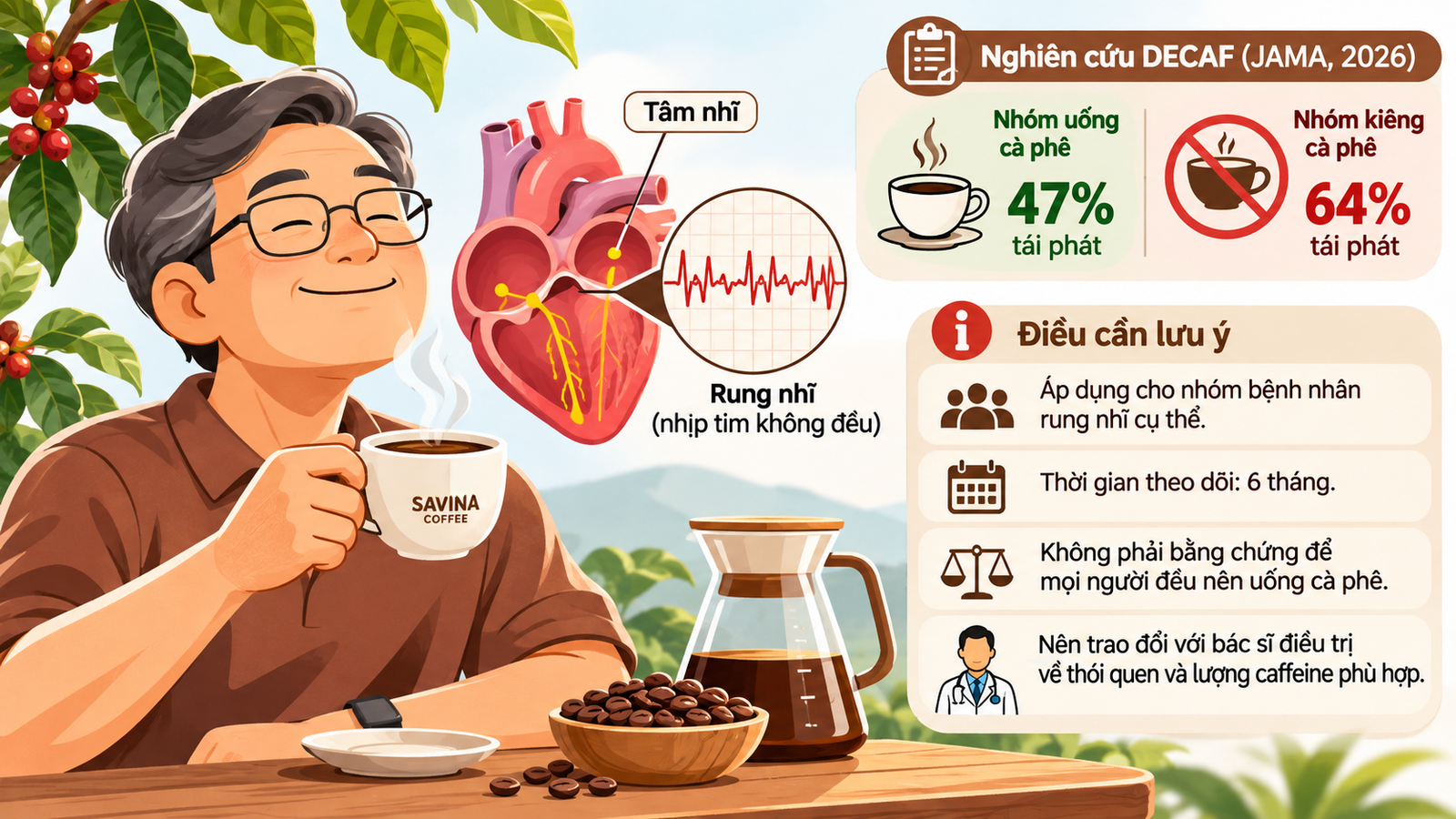
However, a randomized clinical trial published in JAMA in 2026 revisited this question: do patients with existing atrial fibrillation who previously consumed coffee truly need to abstain completely from coffee to reduce the risk of recurrence?
The DECAF study results are notable because the group assigned to continue drinking coffee had a lower rate of atrial fibrillation or atrial flutter recurrence than the abstinence group. However, the study design must be carefully examined before drawing conclusions for public health.
1. What is atrial fibrillation and why is caffeine a concern?
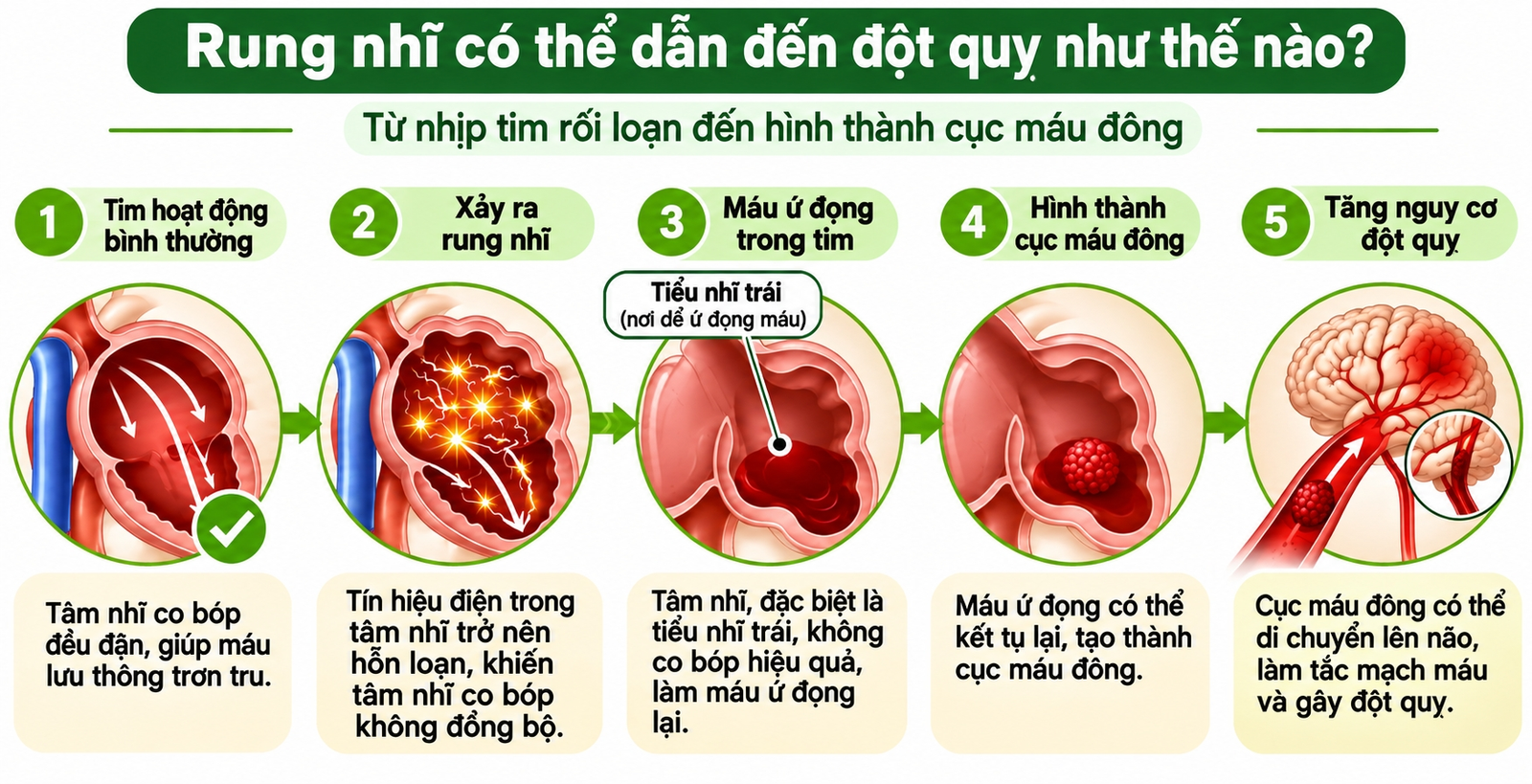
Atrial fibrillation (AF) is a type of arrhythmia in which electrical activity in the atria becomes chaotic, causing an irregular and sometimes rapid heart rate.
Caffeine affects the nervous system and physiological mechanisms related to cardiovascular function. In some sensitive individuals, caffeine consumption may be accompanied by palpitations, rapid heartbeat, or discomfort.
However, palpitations are not synonymous with atrial fibrillation. Furthermore, the response of a healthy individual after a cup of coffee cannot be automatically generalized to the risk of atrial fibrillation recurrence in patients who have been treated.
2. How was the DECAF trial designed?
The study, titled Caffeinated Coffee Consumption or Abstinence to Reduce Atrial Fibrillation: The DECAF Randomized Clinical Trial, was conducted by Christopher X. Wong and colleagues.
This was a randomized clinical trial conducted at five hospitals in the United States, Canada, and Australia. The study enrolled 200 adults with persistent atrial fibrillation or atrial flutter and a history of atrial fibrillation, who had consumed coffee within the previous five years and were scheduled for electrical cardioversion.
Participants were divided into two groups:
- Coffee consumption group: encouraged to drink at least one cup of caffeinated coffee per day.
- Abstinence group: encouraged to abstain from caffeinated coffee, decaffeinated coffee, and other caffeine-containing products.
The follow-up period was six months. The primary endpoint was clinically detected recurrence of atrial fibrillation or atrial flutter.
3. Notable results: lower recurrence rate in the coffee consumption group
| Metric | Coffee consumption group | Abstinence group |
|---|---|---|
| Number of participants | 100 | 100 |
| Recurrence of atrial fibrillation or atrial flutter | 47% | 64% |
| Median coffee consumption during follow-up | 7 cups/week | 0 cups/week |
The observed recurrence rate was 47% in the coffee-drinking group and 64% in the abstention group. The absolute difference between the two rates is 17 percentage points.
Time-to-recurrence analysis showed a hazard ratio of 0.61, with a 95% confidence interval from 0.42 to 0.89 and P = 0.01. This can be interpreted as the group assigned to the coffee-drinking arm having approximately 39% lower risk of recurrence over time in the study’s analytical model.
4. Does this study prove that coffee prevents atrial fibrillation?
No. The DECAF results showed that among the enrolled patients, continuing coffee consumption was associated with a lower recurrence rate compared with coffee abstention during the follow-up period.
The study does not prove that coffee is a treatment for atrial fibrillation, nor does it prove that people who have never drunk coffee should start drinking it for prevention.
This is an important distinction between a trial evaluating continued beverage use in individuals who already have a drinking habit and a trial aimed at determining preventive effects in the general community.
5. Limitations to consider before applying the results
Highly specific study population
Participants were primarily patients with persistent atrial fibrillation or atrial flutter with a history of atrial fibrillation, scheduled for electrical cardioversion. The mean age was 69 years, and 71% were male.
Therefore, these results cannot be automatically generalized to healthy young people, those with recent-onset palpitations, individuals with other arrhythmias, or people who have never consumed coffee.
Limited sample size and follow-up duration
The trial included 200 participants and followed them for 6 months. While this constitutes valuable randomized evidence, the sample size and duration are still insufficient to answer all questions about the long-term impact of coffee on various cardiovascular patient groups.
Inability to isolate the effect of caffeine from the whole coffee matrix
The control group was required to abstain from both caffeinated coffee and decaffeinated coffee, as well as avoid other caffeine-containing products. Thus, the study could not separately determine the effect of caffeine versus non-caffeine compounds in coffee.
Not a study to determine the optimal caffeine dose
The coffee-drinking group was encouraged to consume at least one cup per day. The median consumption during follow-up was 7 cups per week. This does not establish an optimal caffeine level for all patients.
Moreover, a Vietnamese phin coffee cup is not necessarily equivalent to a standard study cup. Volume, coffee variety, brew ratio, and grounds used can cause significant variation in caffeine content.
6. How should people with atrial fibrillation interpret these results?
DECAF is a notable finding because it challenges the notion that all atrial fibrillation patients must completely abstain from coffee. However, the study does not replace individualized assessment by the treating physician.
Patients undergoing treatment for atrial fibrillation should discuss their coffee consumption habits, caffeine intake, and any symptoms occurring after drinking with their cardiologist. If an individual notices that coffee is frequently accompanied by palpitations or uncomfortable symptoms, they should document and discuss this with their doctor rather than drawing their own conclusions from a single trial.
Do not independently stop anticoagulants, rate-control medications, or change treatment regimens based on reading this study’s results.
7. A research result should not become broad public advice
The most valuable aspect of DECAF is not the message “coffee is good for the heart” or “people with atrial fibrillation should drink coffee.” The study’s value lies in providing randomized evidence that coffee abstention is not necessarily the more beneficial choice in every case of atrial fibrillation.
Nutritional and cardiovascular science often does not provide a single answer for everyone. Study population, dosage, follow-up duration, and evaluation criteria all determine how we interpret the results.
With coffee, it is important to distinguish between individual responses, consumption habits, and clinical evidence. This is also a more prudent approach when reading any new health-related studies.
References
- Wong, C. X. et al. (2026). Caffeinated Coffee Consumption or Abstinence to Reduce Atrial Fibrillation: The DECAF Randomized Clinical Trial. JAMA, 335(4), 317–325. https://doi.org/10.1001/jama.2025.21056
- Study information and abstract on PubMed: DECAF Randomized Clinical Trial.
- Clinical trial registration: ClinicalTrials.gov – NCT05121519.