
How does caffeine reduce under-eye puffiness? Decoding the microcirculation mechanism and scientific evidence
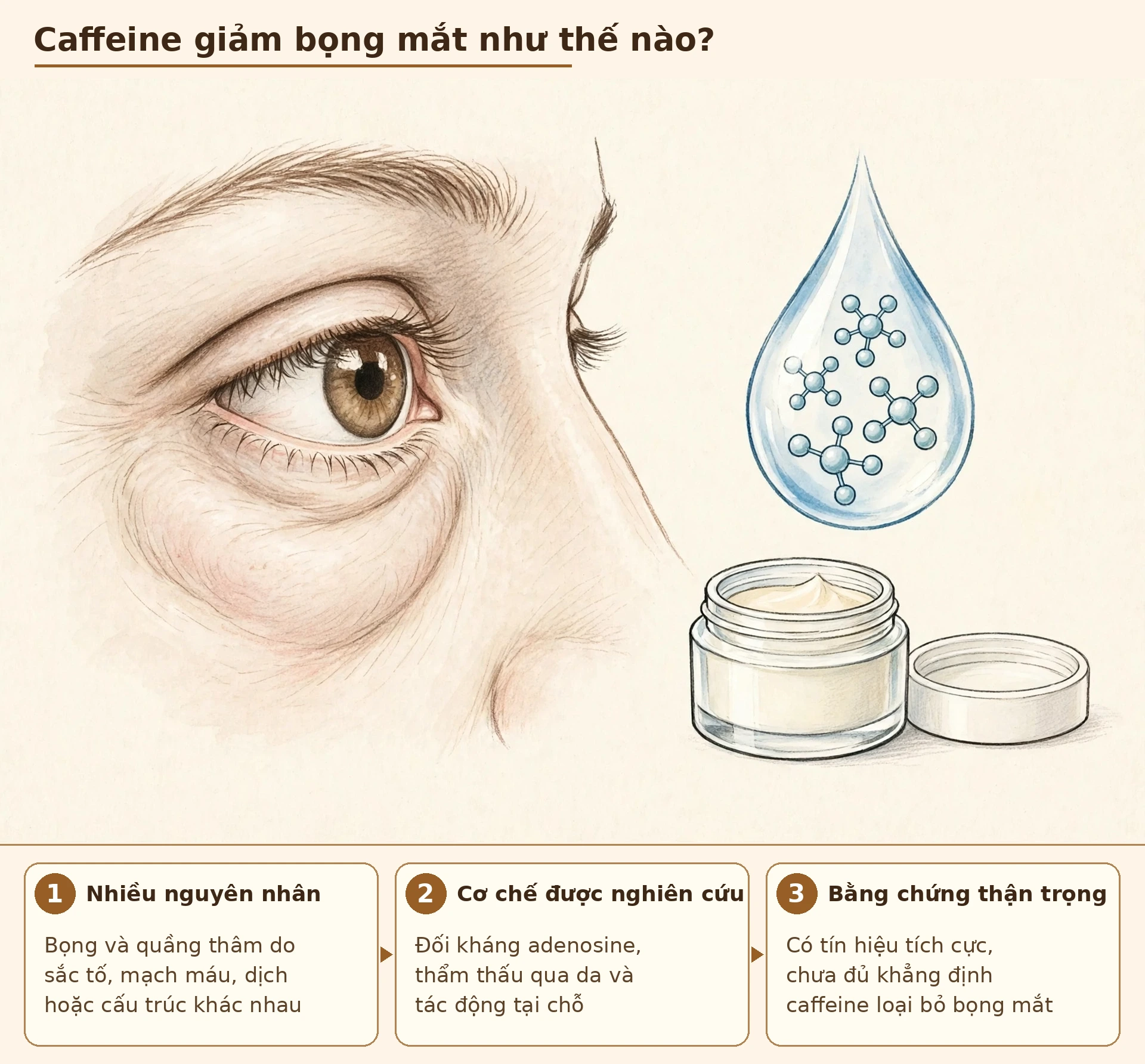
Morning under-eye puffiness may gradually fade after a few hours, while dark circles caused by pigmentation or facial structure tend to persist longer. This difference indicates that the skin under the eyes is influenced not only by skin color but also by fluid distribution, the microvascular system, and underlying tissue structure.
Caffeine appears in many eye care formulations due to its potential to affect certain related biological processes. However, the key question is not simply whether caffeine is good for dark circles, but rather: which mechanisms does this active ingredient affect, how deeply can it penetrate, and to what extent has its efficacy been proven?
To answer this, studies on caffeine pharmacology must be considered alongside evidence of transdermal penetration and human trials. These are three distinct layers of data, and only by distinguishing them can the true value of caffeine in eye cosmetics be properly assessed.
The under-eye area: Why can one manifestation stem from multiple causes?
Dark circles and under-eye bags often appear together but do not necessarily share the same cause. The skin of the lower eyelid is relatively thin with little subcutaneous connective tissue, making the color of blood vessels and underlying tissues more visible. As bone structure, ligaments, or adipose tissue change with age, hollows and shadows can make the eyes appear darker even without increased skin pigmentation.
Meanwhile, periorbital edema is related to fluid accumulation in the tissues. This condition can vary depending on the time of day, allergies, irritation, lifestyle habits, or certain health issues. Distinguishing between these causes is directly relevant to selecting appropriate skincare products.
Key point: Dark circles caused by melanin pigmentation, visible blood vessels, anatomical shadows, and under-eye bags caused by fluid accumulation are distinct issues. An active ingredient may help address one manifestation but does not necessarily improve the others.
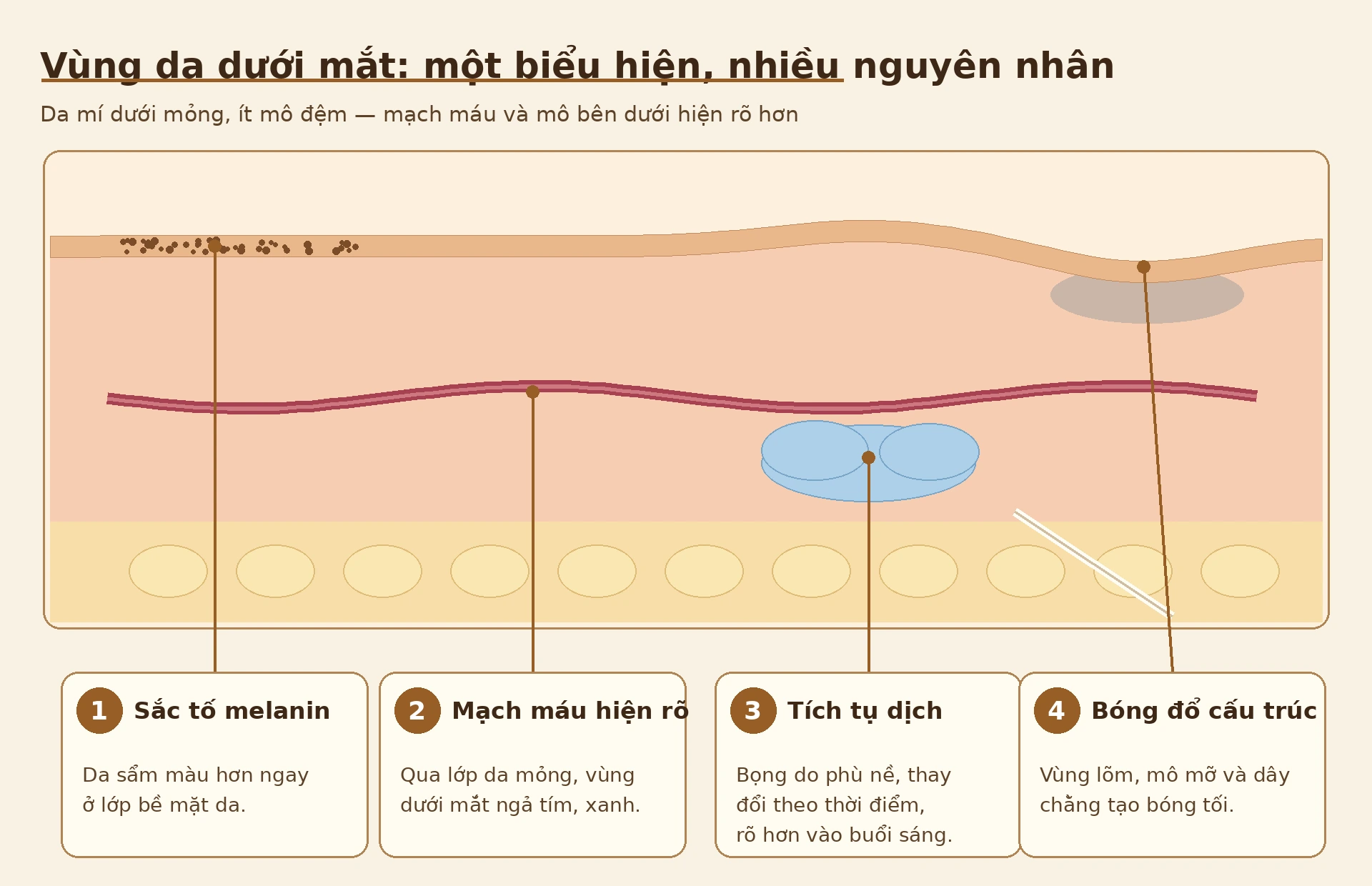
An overview of under-eye dark circles in the Journal of Cutaneous and Aesthetic Surgery analyzes factors ranging from the skin, vascular system, and soft tissues to bone structure and ligaments. The authors emphasize that identifying the cause is a crucial step in selecting the appropriate treatment method.
From adenosine receptors to the biological effects of caffeine
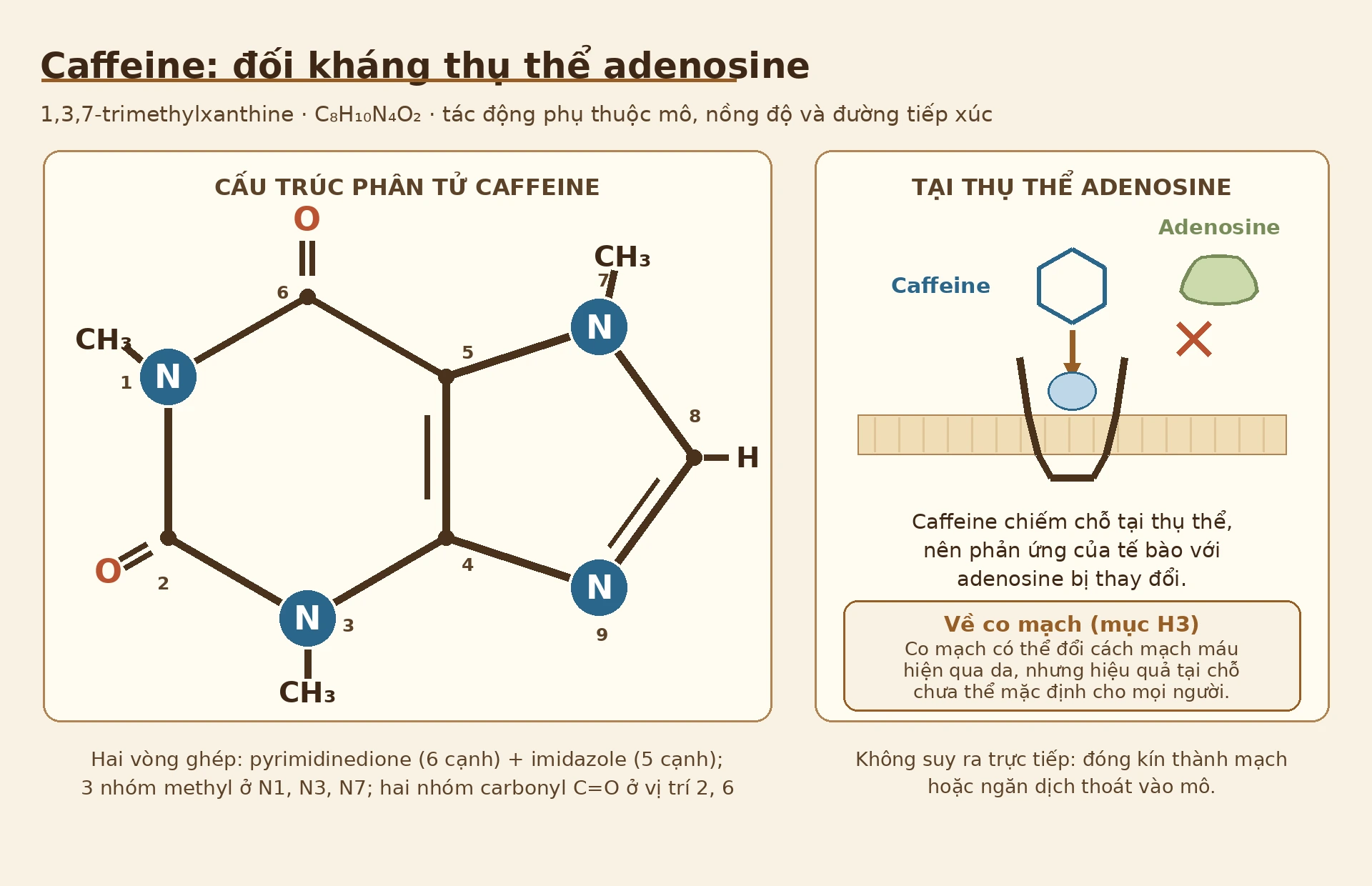
Caffeine, chemically known as 1,3,7-trimethylxanthine, is known for its ability to antagonize adenosine receptors. Adenosine is an endogenous signaling molecule involved in regulating many physiological processes. When caffeine interacts with these receptors, the cellular response to adenosine may change.
However, the effects of caffeine depend on the tissue, concentration, and route of exposure. Results observed from oral caffeine consumption or cell model studies cannot be directly applied to an eye cream.
Vasoconstriction does not equate to reducing all types of under-eye puffiness
Vasoconstriction is the narrowing of the vessel lumen. In principle, changes in vascular tone can affect blood volume in the microcirculation and how the color of blood vessels shows through thin skin. This biological basis is why caffeine is of interest in formulations for the eye area.
Nevertheless, the topical vasoconstrictive effect of applied caffeine should not be assumed to be strong, immediate, or uniform across all individuals. Appropriate experimental data are needed to determine the level of impact in each finished formulation.
Similarly, it cannot be concluded that caffeine directly seals vessel walls or prevents fluid leakage into tissues based solely on the adenosine antagonism mechanism. Edema results from multiple factors, including hydrostatic pressure, vascular permeability, and the lymphatic system's ability to drain fluid.
Penetration capability: Caffeine content does not tell the whole story of efficacy
To exert a topical effect, caffeine must be released from the cosmetic base and pass through the skin barrier. This process depends on the physicochemical properties of the active ingredient, solvent composition, emulsion system, and penetration enhancers.
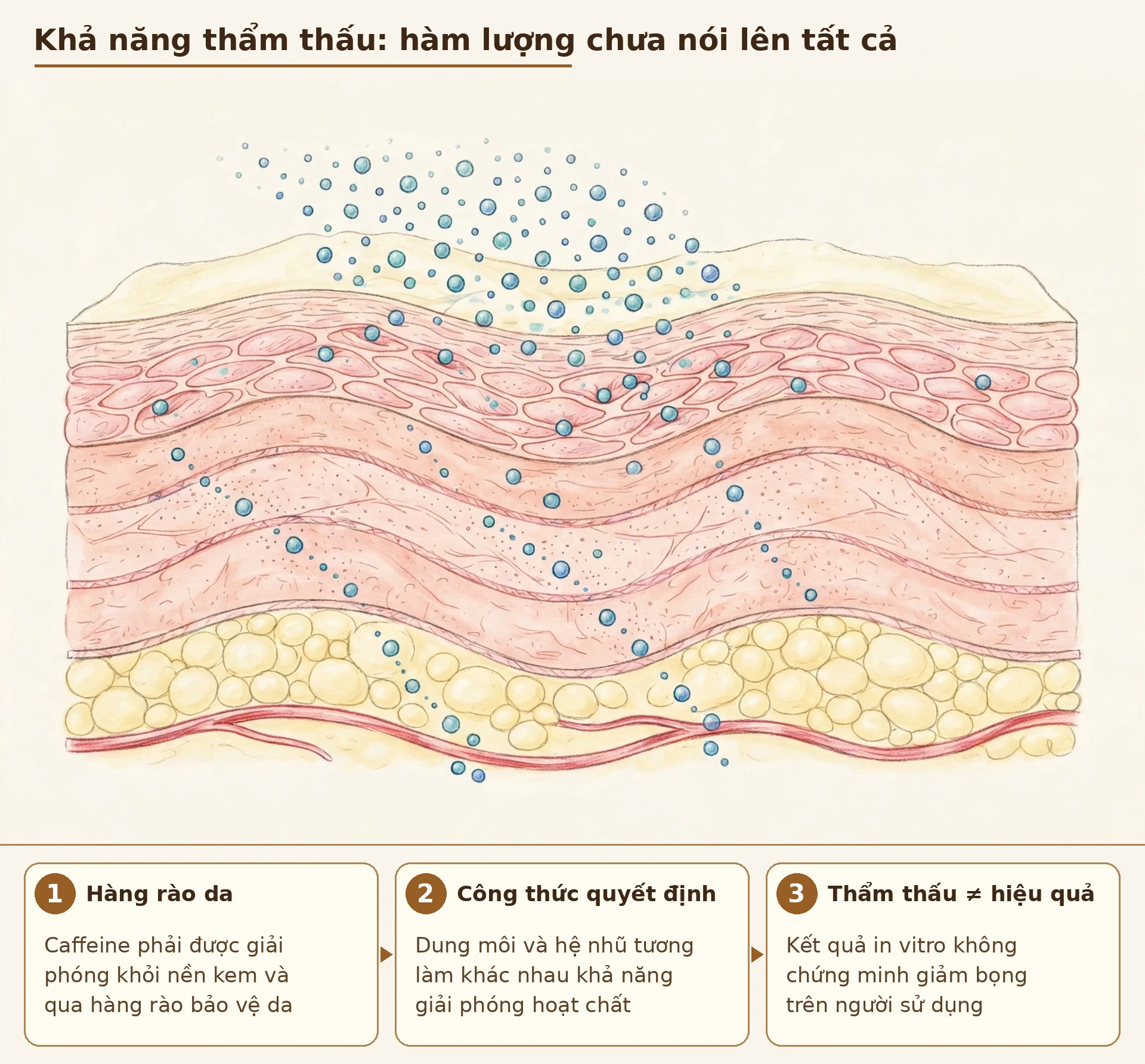
A study published in the International Journal of Pharmaceutics in 2023 investigated cream formulations containing 2% caffeine, using Franz diffusion cells and Strat-M membranes to evaluate release and penetration capabilities. Some formulations optimized with dimethyl isosorbide (DMI) and ethoxydiglycol (EDG) showed higher laboratory penetration results compared to the commercial products used for comparison.
These results indicate that formulation design can significantly affect the delivery of caffeine through the membrane. However, it is important to understand the scope of the study: in vitro penetration tests do not equate to proven reduction of under-eye puffiness in humans.
In other words, two products with the same caffeine concentration may differ in their ability to release the active ingredient. Conversely, higher penetration does not automatically mean better aesthetic efficacy or higher safety for the skin around the eyes.
Clinical evidence: Positive signals exist, but study designs must be interpreted correctly
A review of common ingredients in eye creams, published in the International Journal of Women's Dermatology, evaluated caffeine alongside other active ingredients such as retinoids, vitamin C, peptides, ceramides, and niacinamide. The authors noted the potential of some ingredients in improving signs of aging and common issues in the eye area, while also indicating that this field still requires more high-quality clinical research.
A PubMed-indexed study of a multi-component eye care product followed 40 women for 12 weeks; 37 completed the study. The investigated formula contained vitamin C derivatives, peptides, plant extracts, and caffeine. Objective measurements and participant assessments recorded improvements in several indicators related to dark circles and under-eye bags.
A caveat is that this study had an open-label design and lacked a control group using a vehicle base without active ingredients. Due to the product's multiple components, it is impossible to isolate caffeine's specific contribution to the improvement.
Therefore, the appropriate interpretation is not that caffeine has been proven to eliminate under-eye bags, but that certain formulations containing caffeine show potential for improving the appearance of the under-eye area. The certainty of the evidence depends on trial design, control groups, follow-up duration, and measurement methods.
Correctly identifying the type of dark circles before expecting results from caffeine
| Main manifestation | Potentially related factors | Potential role of caffeine |
|---|---|---|
| Under-eye bags change noticeably in the morning | Fluid accumulation and factors affecting fluid distribution around the eyes | May help temporarily improve appearance in some formulations; efficacy depends on the cause. |
| Dark circles with purple or blue hues | Visible blood vessels under thin skin or changes in microcirculation | There is a basis for studying topical effects, but results are not guaranteed. |
| Dark brown under-eye area | Melanin hyperpigmentation or post-inflammatory pigmentation | Caffeine should not be regarded as the primary active ingredient capable of addressing all forms of hyperpigmentation. |
| Hollows creating shadows | Orbital structure, adipose tissue, and age-related soft tissue changes | The potential for improvement with topical caffeine is very limited if the primary cause is structural. |
The table above is for guidance only and does not replace professional assessment. In practice, an individual may simultaneously have pigmentation, visible blood vessels, and under-eye bags, making it more difficult to evaluate the efficacy of a single active ingredient.
Evaluating caffeine products: Criteria more important than advertising claims
When considering an eye care product, the caffeine concentration is just one data point among many factors to evaluate. The base formulation, stability, active ingredient delivery capability, and tolerability all play distinct roles.
- Formulation design: Consider the solvent system, emulsifiers, and penetration-enhancing ingredients, rather than just comparing caffeine percentages.
- Eye area safety: The product must be designed for the intended area of use. Avoid direct contact with the eyes and discontinue use if irritation occurs.
- Evaluation metrics: High-quality studies should distinguish between under-eye bag volume, dark circle color, pigmentation levels, and subjective user assessments.
- Control group: Comparison with a caffeine-free formula base helps to more clearly identify the effects attributable to this active ingredient.
- Monitoring period: It is necessary to distinguish between temporary effects after application and sustained changes after several weeks of use.
The skin around the eyes is prone to irritation from unsuitable cosmetics. If swelling persists, appears suddenly, occurs on only one side, or is accompanied by pain, redness, fever, or changes in vision, do not rely solely on eye cream; medical evaluation is required.
What can be affirmed from current studies
Caffeine has a biological basis for being studied in eye-area cosmetics and has experimental data supporting its skin permeability. Some studies on multi-ingredient formulations have also noted improvements in the appearance of eye bags and dark circles. However, these results are insufficient to confirm that caffeine alone always causes significant vasoconstriction, directly prevents tissue fluid leakage, or eliminates all types of dark circles.
The value of caffeine should be evaluated within the scope of its expected effects: an ingredient with potential to support under-eye care, with efficacy depending on the cause, formulation, and clinical trial data. This approach aligns with scientific evidence and helps users make more realistic choices in the face of claims about immediate results.
References
- Hamie H. et al. A review of the efficacy of popular eye cream ingredients. International Journal of Women's Dermatology, 2024. View on PubMed.
- Reyes R. et al. Skin penetration of caffeine from commercial eye creams and eye creams designed and optimized based on Hansen solubility parameters. International Journal of Pharmaceutics, 2023; 639:122973. https://doi.org/10.1016/j.ijpharm.2023.122973.
- Nakra T. Infraorbital Dark Circles: A Review of the Pathogenesis, Evaluation and Treatment. Journal of Cutaneous and Aesthetic Surgery, 2016. Read full text on PubMed Central.
- Effectiveness and tolerance of multicorrective topical treatment for infraorbital dark circles and puffiness. Journal of Cosmetic Dermatology. View study abstract on PubMed.