
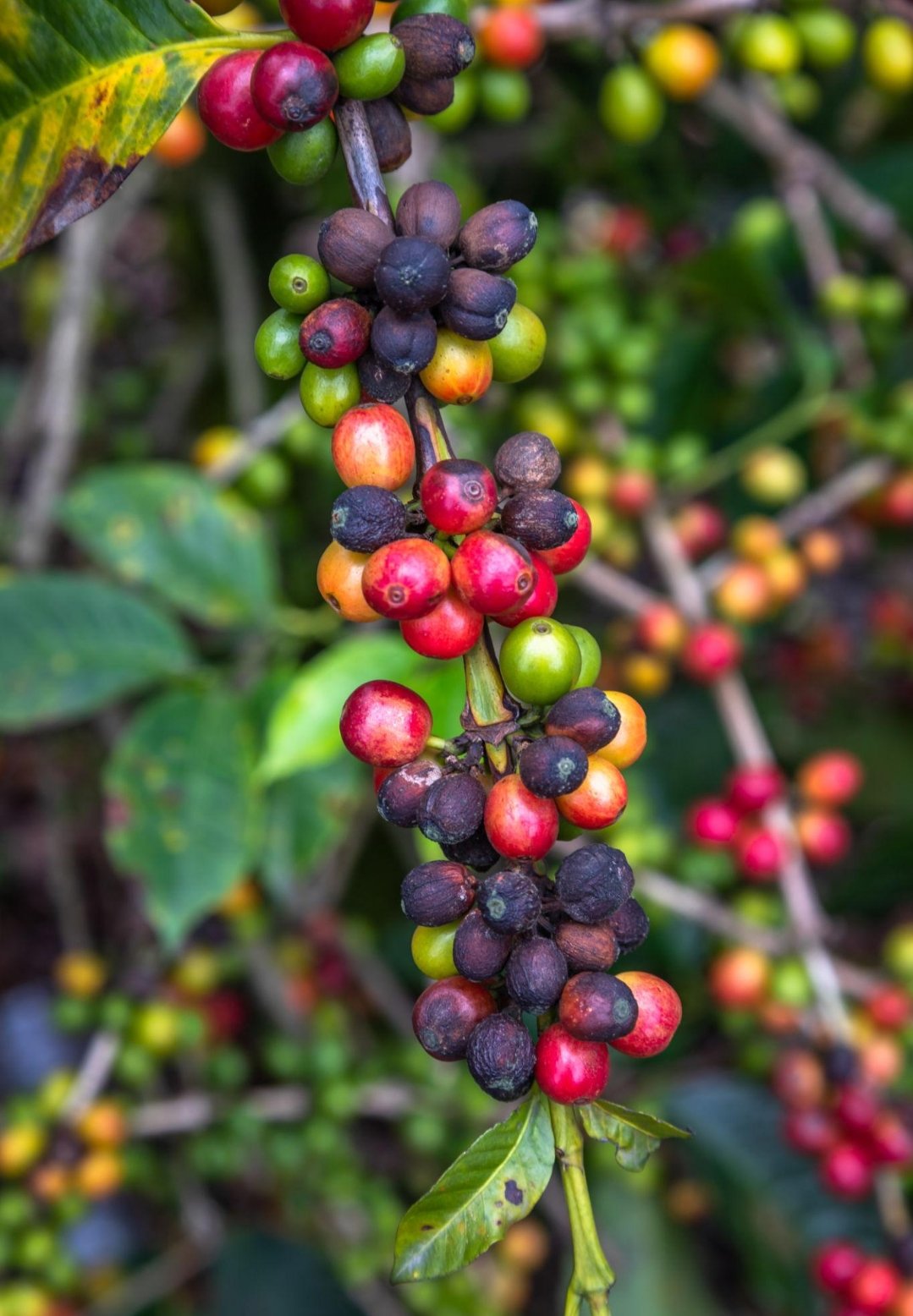
Biochemical mechanism of PPO enzyme causing cherry skin blackening
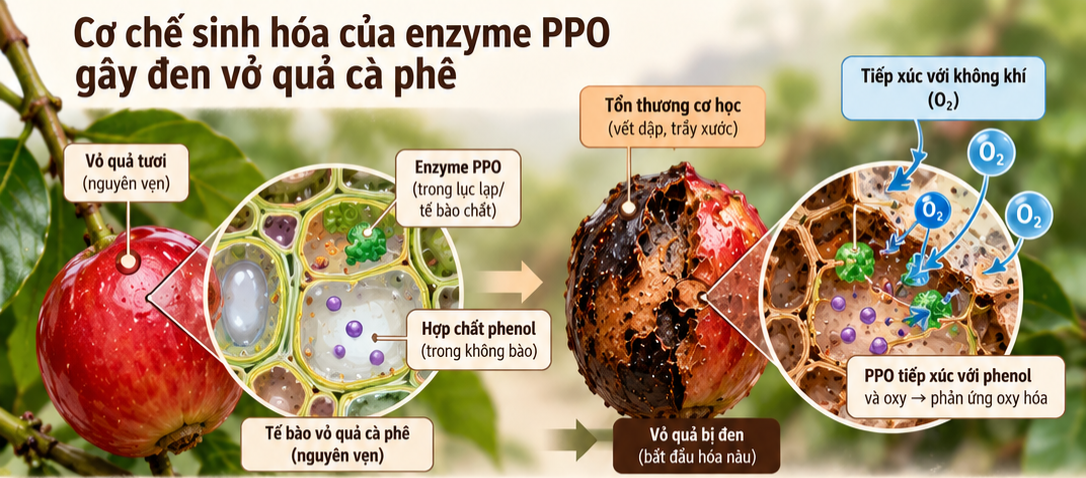
The browning and blackening of fresh coffee cherry skin after harvest is the result of natural biochemical changes, in which the enzyme Polyphenol Oxidase (PPO) plays a key catalytic role. PPO is a copper-containing metalloenzyme widely distributed in plant cells.
When the cellular structure of the coffee cherry skin is disrupted or directly exposed to air, the PPO enzyme catalyzes two consecutive oxidation reactions in the presence of molecular oxygen (O2):
- Hydroxylation reaction: Conversion of monophenol compounds into o-diphenols (ortho-diphenols).
- Oxidation reaction: Further oxidation of o-diphenols into o-quinones (chemically highly active quinones).
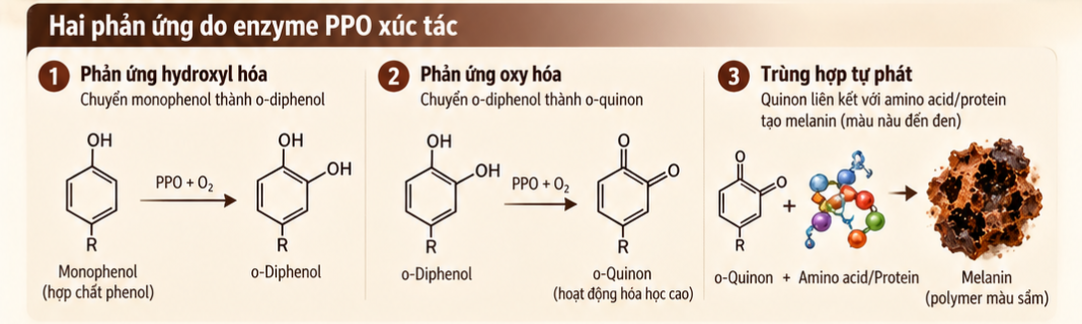 Sau khi được hình thành, các hợp chất quinon phân tử kém bền này nhanh chóng tham gia vào các phản ứng trùng hợp tự phát (không cần xúc tác của enzyme) với các amino acid hoặc protein tự do, tạo thành các polymer phức tạp có màu sẫm gọi là melanin. Đây chính là tác nhân trực tiếp làm vỏ quả cà phê chuyển dần từ màu đỏ tươi sang nâu đậm và cuối cùng là đen sẫm.
Consequences of mechanical damage and sensory quality deterioration
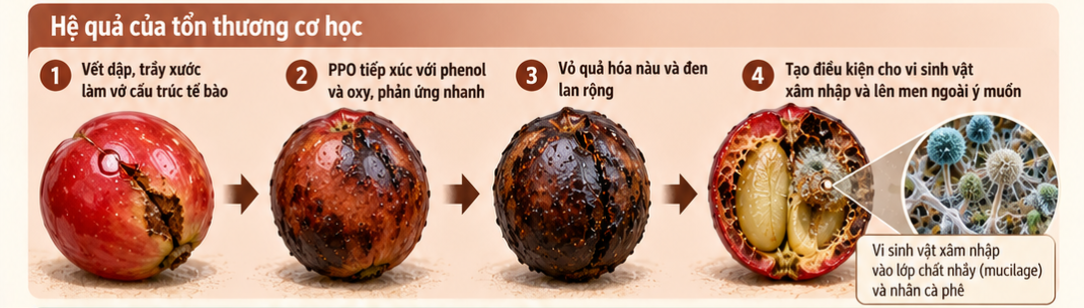
During the harvesting and transportation chain, fresh coffee cherries are highly susceptible to mechanical damage from impact, compression, or friction. Under normal conditions, the PPO enzyme and phenolic compounds (substrates) are located in different cellular compartments (PPO is mainly in chloroplasts or the cytoplasm, while phenolic compounds are concentrated in vacuoles).
When mechanical damage occurs, the boundaries between organelles are completely broken, allowing PPO to come into direct contact and react rapidly with phenolic compounds, facilitated by oxygen entering through the wound. This not only blackens the cherry skin at the site of injury but also spreads across the entire fruit surface.
For the wet processing (Washed Process), maintaining intact fresh cherry skin is decisive for the sensory quality of green coffee beans. Blackened and rotting cherry skin due to PPO activity creates conditions for harmful microorganisms to penetrate deeply into the mucilage layer and the inner coffee bean. This unintended fermentation produces undesirable organic acids, leading to musty and off-flavors, severely affecting cupping scores and significantly reducing commercial value.
Solutions for effective PPO inhibition and fresh cherry preservation
To halt PPO enzyme activity and extend the storage time of fresh coffee cherries before depulping and demucilaging, researchers have applied various combined physical and biochemical solutions:
Cold storage technology
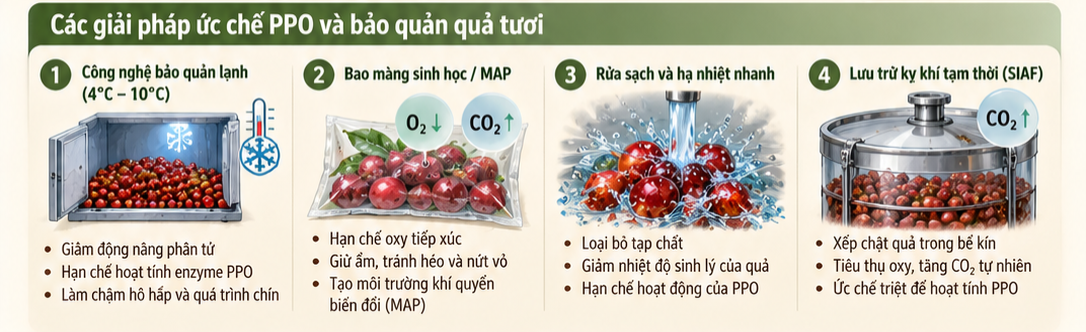
Low temperature is the most intuitive physical method for controlling enzyme activity. When the storage environment temperature is lowered to an optimal level (typically from 4°C to 10°C depending on the coffee variety), the kinetic energy of molecules decreases significantly, limiting activation energy and inhibiting the biochemical reactions of the PPO enzyme. Cold storage also reduces the respiration intensity of fresh cherries, slowing down over-ripening and minimizing water loss.
Application of edible coatings and Modified Atmosphere Packaging (MAP)
Using edible coating materials such as chitosan, pectin, or films combined with natural additives is a breakthrough solution for preserving tropical agricultural products. Edible coatings act as a semi-permeable physical barrier, helping to:
- Limit the diffusion and contact of oxygen from the external environment into the cherry skin cells, thereby cutting off the PPO oxidation reaction chain.
- Prevent water vapor loss, keeping the cherries fresh without wilting and minimizing skin cracking.
- Create a natural Modified Atmosphere Packaging (MAP) environment with high CO2 and low O2 levels around the fruit surface, helping to slow down cellular respiration.
Practical application in the coffee wet processing workflow
In actual high-quality coffee production, farms and processing plants often apply the following integrated control process to preserve fresh coffee cherries:
- Strict harvesting and sorting: Harvest only uniformly ripe cherries, minimizing the rate of bruised or scratched fruit during picking and transportation.
- Cleaning and rapid cooling: Fresh cherries delivered to the factory are washed with cold water to remove impurities and immediately lower the physiological temperature of the fruit.
- Temporary Self-Induced Anaerobic Fermentation (SIAF) storage: Apply the Self-Induced Anaerobic Fermentation (SIAF) technique by tightly packing coffee cherries into sealed tanks. The natural respiration of the fruit consumes remaining oxygen and releases CO2, thoroughly inhibiting PPO activity, which is strictly dependent on oxygen supply.
- Timely hulling: After a short storage period under strict temperature and oxygen control, the coffee cherries are immediately fed into a hulling machine to remove the well-protected outer skin, minimizing the risk of cross-contamination from oxidized phenolic compounds into the green coffee beans inside.