
Do not purchase immature green coffee: Protecting the quality and value of Vietnamese coffee beans
A coffee crop is evaluated not only by harvest yield but also by the quality of each bean. Cherry ripeness at harvest is a critical factor, influencing the chemical composition of the green bean, processing efficiency, and the quality of the brewed beverage after roasting.
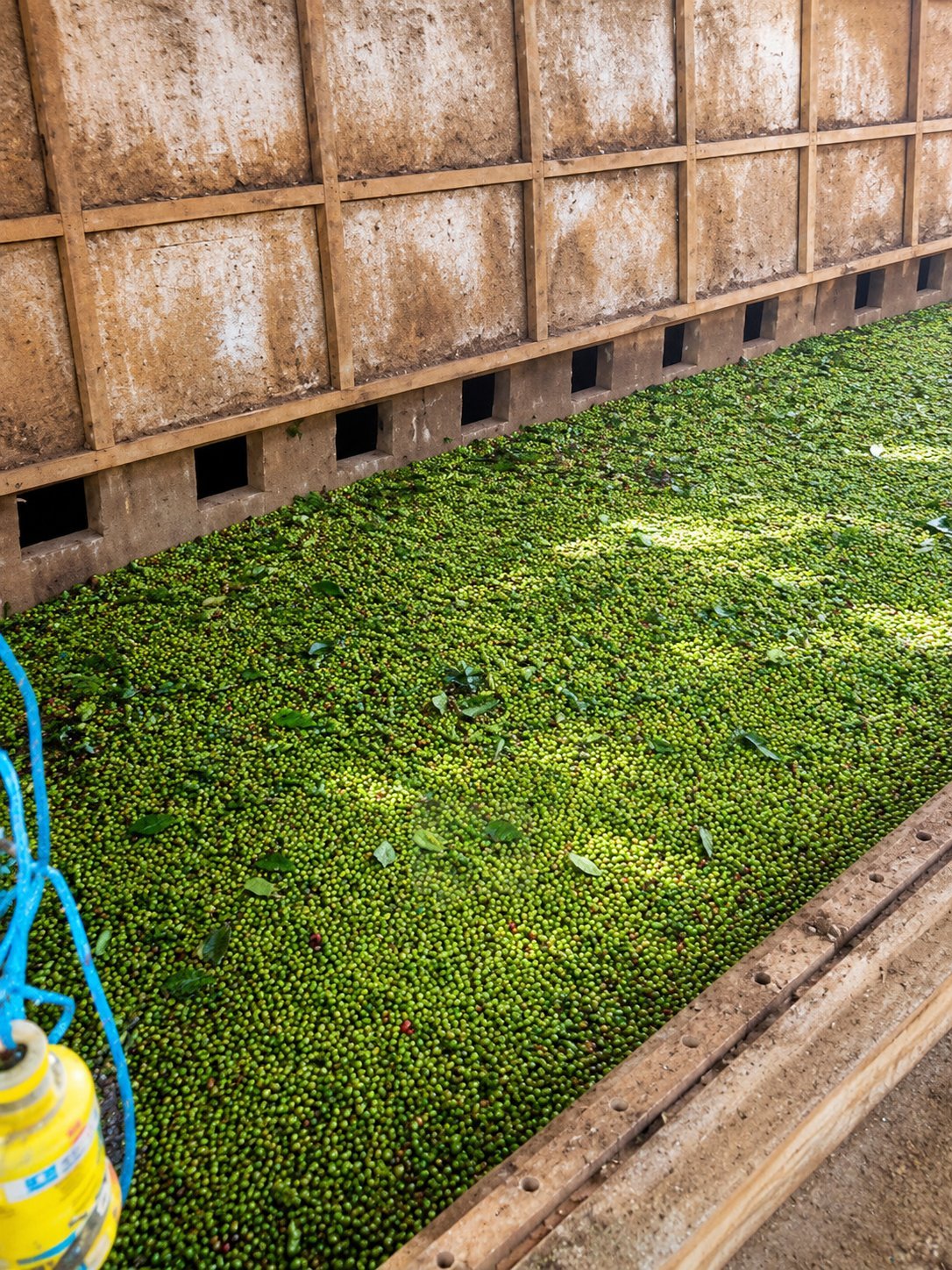
Harvesting excessive amounts of immature cherries can lead to inconsistent raw material. These cherries often contain underdeveloped beans, are more difficult to process during certain preliminary stages, and risk reducing the sensory quality of the final product.
Therefore, limiting the harvesting and purchasing of immature green coffee is not only a technical requirement for producers but also a shared responsibility among smallholder farmers, agents, processing facilities, and businesses in the supply chain.
1. What is immature green coffee?
Coffee cherries undergo multiple development stages from formation after pollination until they reach full ripeness. During this process, cherry size, skin color, firmness, sugar content, and internal bean development all change.
In varieties with red ripe cherries, green color typically indicates immaturity. As development continues, the skin gradually turns yellow, orange, or red, depending on the variety and growing conditions.
Immature green cherries must be distinguished from physiologically mature cherries that have variety-specific coloration. For instance, some coffee varieties have yellow ripe cherries. Therefore, red color alone cannot be used to determine ripeness for all cherries.
Key indicators to consider when assessing ripeness
- Cherry skin color: Compare against the ripening characteristics of the specific variety; do not apply a single color standard to all coffee varieties.
- Cherry size: Mature cherries typically reach the characteristic size of the variety and show few signs of abnormal shriveling.
- Firmness: Immature cherries are generally firmer than ripe cherries.
- Internal bean characteristics: Assess the level of development, fullness, and condition of the beans when evaluating raw material batches.
- Development time: Reference the time elapsed since flowering, but account for variety, altitude, temperature, and cultivation conditions.
2. Why does harvesting immature cherries reduce quality?
During the final stage of cherry development, coffee beans continue to refine their structure and chemical composition. These changes are linked to flavor formation potential during roasting.
A study by Velásquez et al., published in 2018 in Food Chemistry, examined Caturra and Catimor coffees at seven different maturity stages.
The results showed that coffee from fully immature cherries had significantly lower sensory scores compared to cherries at subsequent development stages. The volatile compound profile of this group was also distinct, with lower levels of certain carbohydrate degradation products and higher levels of certain nitrogen-containing and phenolic compounds.
This study indicates that cherry maturity is related to post-roast quality, but also notes that not all stages prior to full color change result in low quality.
3. How do immature cherries affect processing?
The impact is not limited to the cupped coffee after roasting. From the raw material reception stage, a high proportion of immature cherries can increase the complexity of the processing workflow.
Difficulty in removing pulp and mucilage
Immature cherries typically have a harder structure. In wet processing, the skin and pulp may adhere more tightly, making depulping more difficult and increasing equipment control requirements.
Increase sorting steps
Cherries with small, light, or underdeveloped beans may need to be separated during processing. If not properly removed or sorted, they can end up in the finished green coffee lot.
Difficulty in controlling raw material uniformity
A processing batch containing cherries at various stages of maturity will have lower uniformity. This makes it difficult for the processing facility to apply an optimal processing protocol to the entire raw material.
Therefore, pre-processing cherry sorting is a crucial step, especially for coffee lots targeting high quality.
4. How do unripe cherries affect post-roast flavor?
Cherry maturity is related to the chemical composition of green coffee beans. Changes in carbohydrates, phenolic compounds, and flavor precursors can influence chemical reactions during roasting.
In the study by Velásquez et al. (2018), the group of completely unripe cherries produced roasted coffee with lower sensory scores. Analysis results also showed differences in the volatile compound profile between this group and more developed cherry groups.
In practical cupping, raw materials with a high proportion of unripe cherries may exhibit undesirable characteristics such as grassy, rough, or astringent notes. However, one should not assert that every coffee lot with a certain percentage of unripe cherries will definitely display the same flavor defect.
5. Not all non-red cherries are unripe coffee
This is a point that needs to be correctly understood when crafting messages about coffee harvesting.
Cherry color is a useful indicator, but not the sole criterion. Each variety may have different ripe cherry colors. Furthermore, studies on maturity show that some transitional stages can yield sensory quality close to that of fully ripe cherries.
In the study by Velásquez et al., samples from the semi-mature yellow-green stage onward showed minor or statistically insignificant differences in certain sensory attributes and volatile compounds compared to more mature stages.
This does not mean that mass harvesting of green cherries is advisable. It indicates the need to distinguish completely unripe cherries from those that have developed to a transitional stage, rather than relying solely on whether the cherry skin has turned red.
| Cherry group | Characteristics to consider | Processing direction |
|---|---|---|
| Unripe green cherries | Underdeveloped, often hard, with beans that may be small or light. | Limit harvesting; if mixed into the raw material, they require sorting. |
| Color-changing cherries | In the maturation stage; requires correlation with variety and bean characteristics. | Evaluate according to the variety's harvesting standards and quality targets. |
| Ripe cherries | Attain the characteristic color and maturity traits of the variety. | Prioritize harvesting and processing using appropriate methods. |
| Overripe or dried cherries | Signs of dehydration, uncontrolled fermentation, or spoilage may be present. | Sort separately; do not automatically mix with properly ripe cherries. |
The table above provides general classification guidelines and is not an official grading standard for all coffee varieties.
6. How should enterprises and agents establish purchasing standards?
Limiting the purchase of immature green coffee is effective only when clear raw material acceptance standards are in place. If farmers are merely urged not to pick immature cherries without a mechanism for quality-based assessment and pricing, the message is unlikely to translate into practical change.
Inspect samples before accepting shipments
Agents and processing facilities should take representative samples from each batch to assess the proportion of immature, ripe, overripe, and dried cherries. Samples must be taken from multiple locations to minimize bias caused by uneven cherry distribution.
Clearly define the allowable proportion of immature cherries
Purchasing standards must specify how to identify immature cherries, the sampling method, and the acceptable tolerance limit. Thresholds should be tailored to the variety, processing method, and each enterprise’s quality requirements.
Encourage selective harvesting by farmers
In orchards with uneven ripening, multi-pass selective harvesting can increase the proportion of cherries at optimal ripeness. This approach must be balanced against labor costs, terrain, and harvest organization conditions.
Price according to actual quality
If uniformly ripe coffee commands a fair price, farmers will be motivated to invest additional effort in harvesting and sorting. Conversely, if all batches are purchased at the same price regardless of quality, the supply chain will struggle to create incentives for quality improvement at the source.
7. Responsibility for safeguarding the value of Vietnamese coffee
Coffee quality does not begin at the roaster or in the cupping lab. It begins in the field, through crop care, harvest timing, and the producer’s selection of individual cherries for processing.
Farmers need guidance on identifying optimal ripeness and fair compensation for quality. Agents must have transparent purchasing standards. Processing facilities must control incoming raw materials. Enterprises must remain committed to quality rather than pursuing volume alone.
Thu hoạch đúng độ chín – Phân loại đúng chất lượng – Thu mua có trách nhiệm.
Không khuyến khích hái quả xanh non, không đánh đồng mọi quả chưa đỏ là quả non. Cùng xây dựng chuỗi cà phê minh bạch và nâng cao giá trị hạt cà phê Việt Nam.
References
- Velásquez, S., Peña, N., Bohórquez, J. C., Gutiérrez, N., & Sacks, G. L. (2018). Volatile and sensory characterization of roast coffees – Effects of cherry maturity . Food Chemistry. DOI: 10.1016/j.foodchem.2018.08.127.
- Hu, G., Peng, X., Wang, X., Li, X., Li, X., & Qiu, M. (2020). Excavation of coffee maturity markers and further research on their changes in coffee cherries of different maturity . Food Research International, 132, 109121.
- Variation in Soluble Sugars in Arabica Coffee Cherry Fruits . Study on variations in soluble sugars across different color levels and maturity stages of Arabica cherries.
- From Plantation to Cup: Changes in Bioactive Compounds during Coffee Processing . Overview of changes in bioactive compounds during coffee production and processing.
- Coffee Harvesting and Processing – Unit 3, Module 1: Harvesting . Technical guide on coffee cherry harvesting and processing.
Scope of evidence: Research findings on coffee cherry ripeness depend on variety, location, growing conditions, and processing methods. The cited studies do not establish a universal maximum threshold for immature cherries applicable to all coffee-growing regions in Vietnam.