
The importance of solvent consistency in cupping and brewing
In the sensory evaluation of cupping specialty coffee, consistent brewing solvent is a mandatory condition to ensure objectivity and accuracy. Water is not merely a liquid that dissolves flavor compounds; its own physicochemical structure—with free mineral ions—acts as a chemical agent directly involved in binding, extracting, or neutralizing the organic acids and sweetening compounds within the coffee bean structure.
Even slight changes in the concentration of mineral ions in brewing water can completely alter the flavor profile of the same coffee sample, turning a cup with bright acidity and juicy fruitiness into one that is flat and bland, or conversely, harsh and rusticly bitter.
Core mineral indices according to SCA cupping water standards
The Specialty Coffee Association (SCA) has established strict technical standards for water used in brewing and cupping to minimize sensory deviations caused by water sources, while also protecting equipment from boiler scale buildup.
These indices focus on three core parameters:
- Total Dissolved Solids (TDS): Measures the total amount of minerals, salts, and metals dissolved in water. The SCA cupping water standard specifies an ideal TDS range for brewing water of 75 to 250 ppm (mg/L).
- Calcium Hardness: The content of calcium ions, with the standard requiring maintenance within the range of 50–175 ppm CaCO3.
- Alkalinity: The water's acid-buffering capacity (primarily determined by bicarbonate ions), with the SCA standard recommending an optimal level of approximately 40–70 ppm.
Physicochemical mechanisms of mineral ions and the pH buffer system
Alkalinity (Bicarbonate HCO3-) and the acid-buffering mechanism
Alkalinity acts as a pH buffer that directly determines whether the natural acidity in a cup of coffee is maintained or suppressed. When water comes into contact with coffee grounds, natural organic acids (such as citric, malic, and phosphoric acids) are extracted.
If the brewing water has an excessively high bicarbonate concentration, these bicarbonate ions will react with and directly neutralize the organic acids, converting them into neutral salts. This process significantly reduces bright acidity and fruitiness, diminishing the characteristic complexity of specialty coffee. Simultaneously, this phenomenon inadvertently highlights bitter notes and burnt roast flavors in the mouth.
Magnesium (Mg2+) and Calcium (Ca2+) in promoting extraction
Divalent metal ions (representing total hardness) play a crucial role in binding with flavor compounds:
- Magnesium (Mg2+): Has a very strong chemical affinity for polar compounds, particularly oxygen-rich compounds that contribute to fruity aromas and sweetness. Water rich in magnesium ions promotes more efficient extraction, enhancing natural sweetness, juiciness, and creating body in the cup.
- Calcium (Ca2+): Supports the physical structure (body) of the coffee, while also highlighting brightness if kept in balance with magnesium. However, if calcium concentration exceeds the standard threshold, it can precipitate with organic compounds, causing a rough mouthfeel and unpleasant harsh acidity.
Sensory impact of hard and soft water on espresso
The interaction between hardness (calcium, magnesium) and alkalinity (bicarbonate) creates distinct sensory changes when tasting espresso:
- Excessively soft water (low TDS, deficient in mineral ions): Results in espresso that is weak, thin-bodied, and flat. Due to the lack of positive charges from divalent ions to strongly attract flavor compounds from the coffee grounds, extraction is limited.
- Hard water with high alkalinity: Completely suppresses the bright, clean acidity of organic acids, making the espresso taste coarsely bitter, dry, and flat.
- Water balanced according to SCA standards: Optimizes the natural sweetness of espresso through the strong affinity of magnesium, reinforces the crema layer and full body structure thanks to calcium, while maintaining bright natural acidity due to a moderate alkaline buffer system.
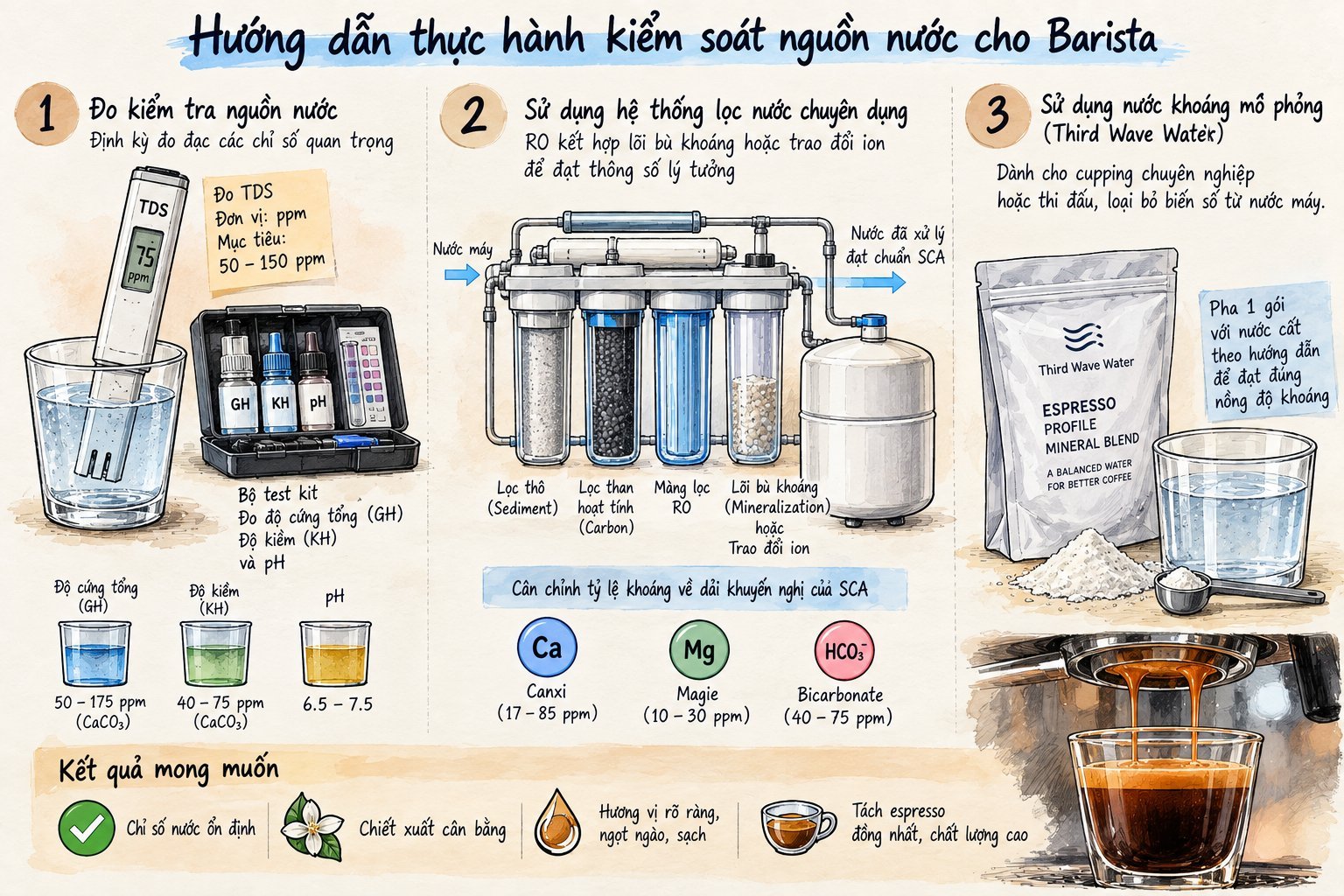
Practical Guide to Water Quality Control for Baristas
To achieve consistent espresso quality, baristas and roasters must implement strict water quality control measures:
- Use TDS meters and test kits: Regularly measure the TDS, total hardness, and alkalinity of the water supply at the bar.
- Dedicated water filtration systems: Use reverse osmosis (RO) systems combined with specialized remineralization cartridges or ion exchange systems to actively adjust magnesium, calcium, and bicarbonate ratios to the SCA-recommended ranges.
- Use simulated mineral water (Third Wave Water): For professional cupping or competition purposes, using distilled water blended with standardized mineral packets is the optimal solution to completely eliminate variables from local tap water.
- What is the SCA Water Standard? Complete Coffee Brewing Guide: Water for Coffee.
- The Role of Ions in Coffee - APAX LAB.
- How Do Water Minerals Affect Your Espresso Flavor Profiles? - Third Wave Water.