
Biochemical Boundaries: From Hay-Like Flavors to Chocolate Notes at the 20% DTR Mark
Why can one batch of lightly roasted coffee exhibit hay-like, raw grain flavors and lack sweetness, while another clearly displays chocolate, cocoa, and brown sugar notes? The answer lies not in a single number on the roast curve, but in the combination of raw material, heat transfer kinetics, and the chemical transformations occurring within the bean.
Development Time Ratio (DTR) is a metric commonly used by roasters to describe the ratio of development time after First Crack to the total roast time. The 20% DTR mark is frequently cited in coffee roasting practice, but it is not a proven biochemical boundary where hay-like flavors abruptly transition into chocolate.
To properly understand this relationship, it is necessary to distinguish three factors: the compounds responsible for green, hay-like sensations; the reactions that form roasted aromas; and how DTR reflects development time within the overall thermal profile.
1. What does a 20% DTR actually signify?
DTR is calculated by taking the time from First Crack to drop time, dividing it by the total roast time, and then multiplying by 100%.
Formula:
DTR (%) = Development Time / Total Roast Time × 100
For example, if a roast batch lasts 10 minutes and the time from First Crack to drop is 2 minutes, the DTR will be 20%.
However, two roast batches with the same 20% DTR can still produce very different flavor profiles. One batch may reach First Crack at a different point, have a different Rate of Rise (RoR), a different end temperature, or use raw materials with different chemical compositions.
Therefore, DTR is a time-based metric, not a direct measurement of the extent of the Maillard reaction, the quantity of chocolate aroma compounds, or the uniformity of development within the bean.
2. Why can underdeveloped coffee exhibit hay-like flavors?
During the early stages of roasting, coffee beans undergo heating and moisture loss. As the temperature rises, components such as carbohydrates, amino acids, organic acids, and many aroma precursors begin to participate in complex chemical reactions.
If the roast profile does not provide sufficient thermal development for the specific bean type and sensory target, certain green, grain-like, or hay-like characteristics may remain prominent in the cup. This state is often associated with underdevelopment.
However, hay-like flavors do not always prove that the DTR is too low. Raw material characteristics, fruit ripeness, processing methods, storage conditions, and extraction efficiency can also influence this perception.
Research on coffee roasting defects shows that underdeveloped roast samples may exhibit grassy characteristics and lack the caramelization notes commonly found in more developed roasts. This indicates a correlation between the roast profile and sensory attributes, not evidence that a fixed DTR ratio will completely eliminate hay-like flavors.
3. Chemical mechanisms behind the formation of chocolate aromas
Chocolate aroma in roasted coffee does not originate from a single compound. It is the sensory result of multiple volatile compounds interacting with each other, along with their concentrations, the overall aroma background, and human perception thresholds.
3.1. Maillard Reaction
The Maillard reaction occurs between carbonyl compounds, including reducing sugars, and amino groups from amino acids or other nitrogen-containing compounds. This reaction sequence produces numerous intermediate products, which subsequently transform into compounds contributing to color and roasted aromas.
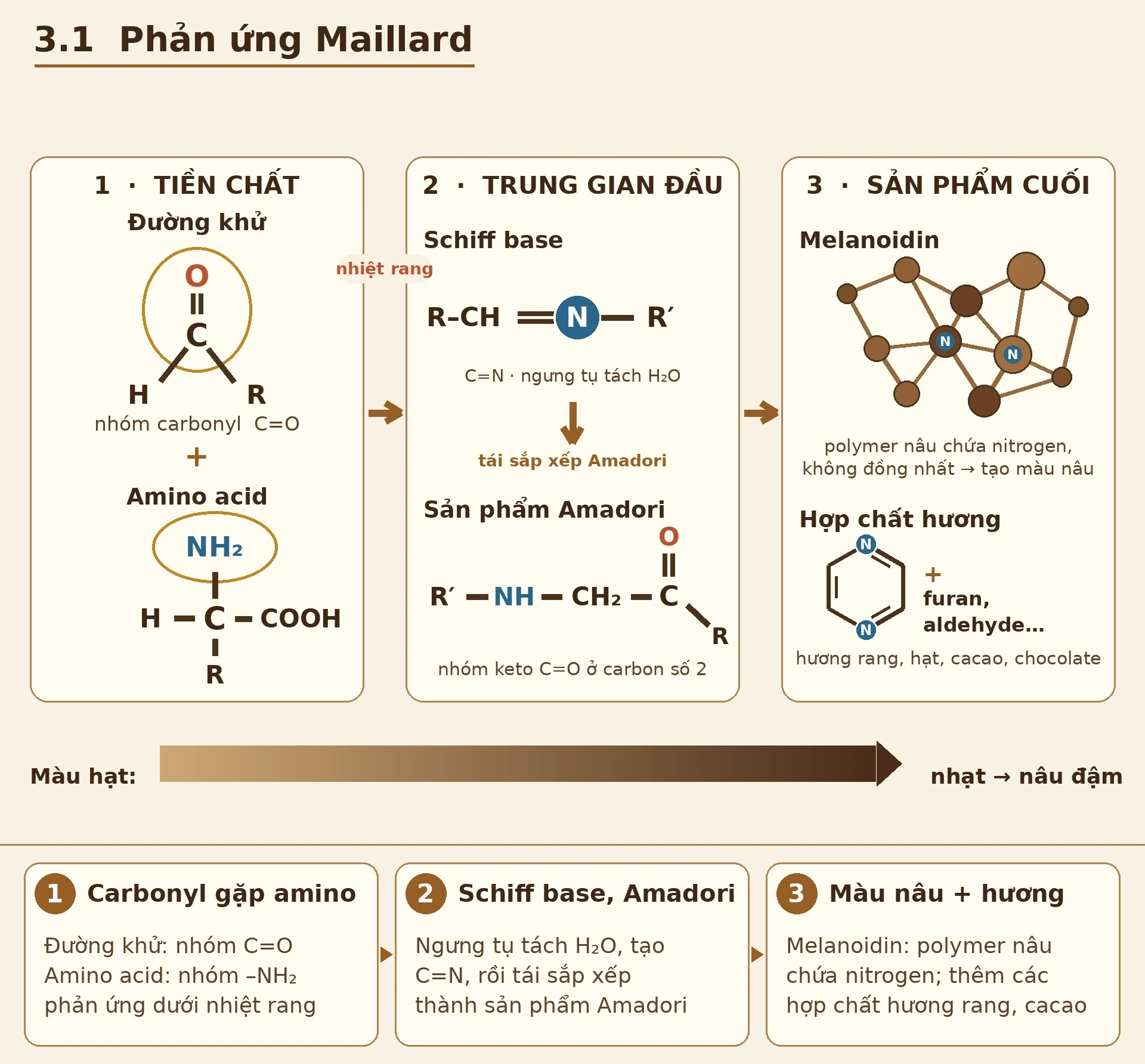
In coffee, Maillard reaction products contribute to the formation of roasted, grainy, nutty, cocoa, and chocolate notes. The extent of their formation depends on temperature, time, moisture content, and the precursor composition of the beans.
3.2. Strecker Degradation
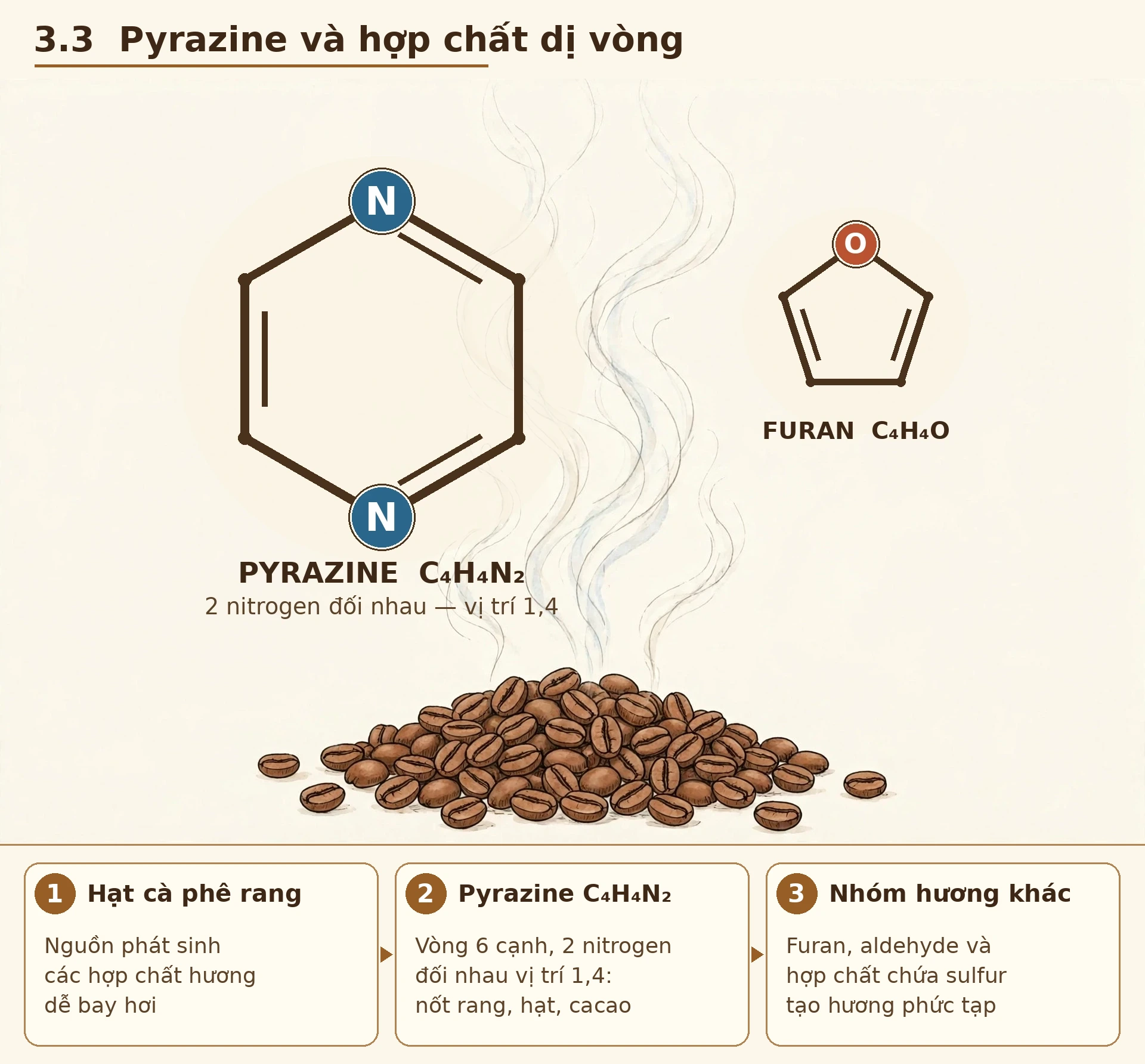
Strecker degradation is closely linked to the Maillard reaction. In this process, amino acids react with suitable carbonyl compounds to produce aldehydes with distinct aromatic properties.
Certain aldehydes contribute to perceptions of malt, cereal, honey, or roasted nuances. The specific sensory impact depends on the type of molecule and its concentration in the aroma mixture.
3.3. Pyrazines and other heterocyclic compounds
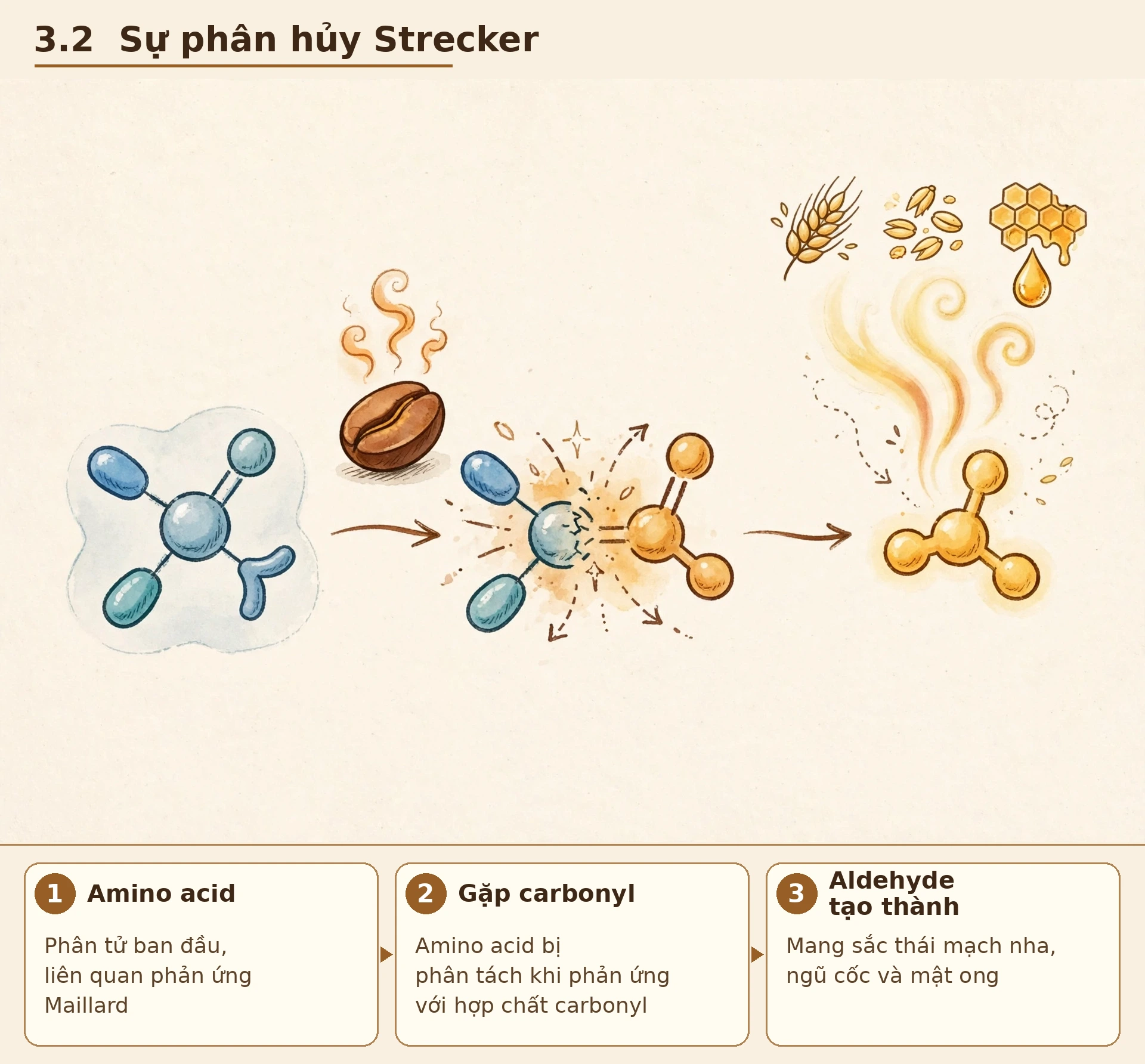
Pyrazines are a group of nitrogen-containing heterocyclic compounds that play a significant role in the aroma of roasted coffee. Certain pyrazines are associated with roasted, nutty, cocoa, and chocolate notes.
In addition to pyrazines, other compound groups such as furans, aldehydes, and sulfur-containing compounds also contribute to the complex aroma of coffee. The presence of a single compound group alone cannot be used to conclude that a cup of coffee will definitely have a distinct chocolate flavor.
4. Is a 20% DTR the threshold for transitioning from hay-like to chocolate flavors?
No. A 20% DTR is not a universal biochemical threshold. There is no basis to claim that when development time reaches exactly 20% of the total roast time, reactions producing chocolate aromas begin or hay-like flavors disappear.
Key chemical reactions during coffee roasting occur continuously and overlap. The formation, transformation, and degradation of aroma compounds do not all activate simultaneously at a specific DTR milestone.
The 20% mark is more useful as a reference point for comparing roast batches with the same raw materials and experimental conditions. If flavor changes when adjusting development time, the roaster must consider final temperature, Rate of Rise (RoR), First Crack timing, bean color, and actual degree of development.
At the same 20% DTR, one roast batch may exhibit clear sweetness and chocolate notes, while another may still retain grassy, sharp acidity, or lack depth. Conversely, a batch with a lower DTR can still yield good results if the entire thermal profile aligns with the raw material and sensory goals.
5. How to test for increased chocolate flavor without losing brightness
Instead of striving for a 20% DTR at all costs, roasters can conduct controlled experiments to determine the appropriate development time for each bean type.
- Keep raw materials and initial conditions consistent: Use the same coffee lot, batch weight, equipment, and operating conditions to minimize confounding factors.
- Record the full thermal profile: Track First Crack timing, development time, total roast time, RoR, and drop temperature. DTR should be evaluated alongside these parameters.
- Compare roast batches with different development levels: Adjust development time in small increments, while recording bean color and changes in thermal dynamics.
- Conduct post-roast sensory evaluation: Use the same brewing method and tasting conditions to compare the intensity of chocolate, cocoa, hay-like, acidity, sweetness, bitterness, and aftertaste.
- Verify repeatability: Repeat the experiment before concluding that a roast profile is suitable. If necessary, measure color and extraction indices to supplement the data.
The goal is not to extend development time as much as possible. Over-development can reduce fruity nuances, increase the perception of dark roast, and alter overall balance. It is essential to find the optimal point between desired chocolate flavor, sweetness, acidity, and the inherent characteristics of the raw material.
6. Conclusion: Chocolate flavor is the result of the entire roast profile
The transition from hay-like sensations to chocolate aroma is not a single reaction occurring at 20% DTR. It is the result of multiple chemical and physical processes throughout the roasting process, influenced by precursors in the bean, heat transfer history, development time, and final roast degree.
DTR is a useful tool for describing and comparing roast profiles, but it cannot replace thermal data and sensory evaluation. By understanding the limitations of this metric, roasters can use it as an experimental variable rather than a rigid rule.
Core message: A 20% DTR does not automatically produce chocolate flavor. The key is controlling the entire roast profile and confirming results through systematic sensory evaluation.
References
- How to Identify Roast Defects in Coffee Beans Based on the Volatile Compound Profile – research on volatile compounds associated with roasting defects, including underdevelopment.
- Effects of postharvest processing on aroma formation in roasted coffee – a review – overview of flavor precursors and mechanisms of aroma formation in coffee.
- A Compositional and Sensory Perspective of Coffee Flavor by Roasting: An Overview – overview of Maillard reactions, Strecker degradation, and aroma-forming compounds in roasted coffee.
- Development time and development time ratio – a comprehensive resource on development time, DTR, and interpretation limits for this metric.
Explore more knowledge about coffee roasting techniques and the factors influencing flavor at SAVINA Coffee Knowledge.