
Strip picking coffee: Impact on bean quality, Quaker beans, and the role of Brix
Strip picking saves time and labor, but can result in a batch containing cherries at various stages of ripeness. This inconsistency affects sorting, processing, and the ability to control final product quality.
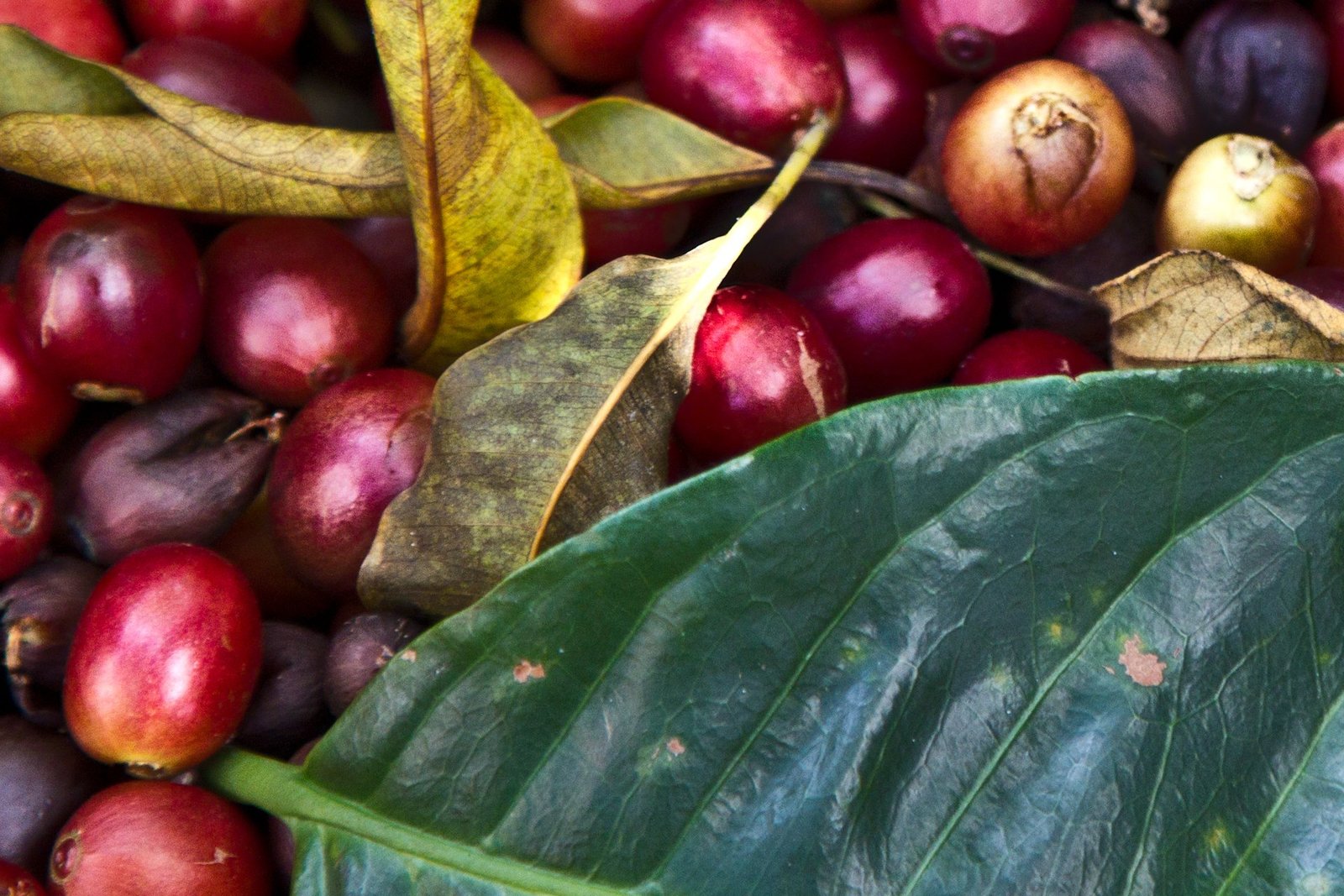
Image source: PilotChicago
To properly understand the issue, it is necessary to distinguish three factors: uniformity of cherries at harvest, Quaker beans appearing after roasting, and Brix used as a reference for soluble solids in cherry juice. These three factors are related but cannot be used interchangeably.
1. What is strip picking coffee?
Strip picking is a harvesting method that collects most cherries from the branch in a single pass, rather than selectively picking individual cherries that have reached appropriate ripeness. Depending on the harvest timing, a strip-picked batch may include green, turning, ripe, and overripe cherries.
Ripening stages that may appear in a single harvest batch
Color is only a reference indicator; actual ripeness also depends on the coffee variety.
Diagram illustrating common ripeness levels, not a standard color scale applicable to all varieties. Overripe cherries are not necessarily defective; signs of rot, mold, and actual condition must be checked.
What is the difference between selective picking and strip picking?
| Criteria | Selective picking of ripe cherries | Strip picking |
|---|---|---|
| Harvesting method | Prioritizes cherries at appropriate ripeness | Collects most cherries from the branch in a single pass |
| Uniformity | Generally higher if selected correctly | Depends on the proportion of cherries at each ripening stage |
| Labor | Usually more labor-intensive, potentially requiring multiple passes | Can reduce harvesting labor |
| Post-harvest control | Sorting and inspection are still required. | Greater attention is needed if the raw material contains cherries at varying degrees of ripeness. |
Strip picking does not equate to low-quality coffee. The outcome also depends on the proportion of unripe cherries, coffee variety, harvest timing, processing method, and raw material control capabilities.
2. How can unripe cherries affect the beans?
During development, coffee beans undergo changes in chemical composition. Sugars, organic acids, phenolic compounds, and aroma precursors change according to the developmental stage. Therefore, beans from cherries that have not reached optimal ripeness may differ from mature beans in composition and roasting behavior.
From cherry ripeness to roasting results
The diagram illustrates potential correlations, not absolute causal relationships in every coffee lot.
Cherry skin color does not accurately indicate all characteristics of the inner bean. Color at ripeness also varies by variety and environmental conditions. Therefore, it is advisable to combine sampling, sorting, processing control, and finished product evaluation.
3. What are Quaker beans?
Quaker beans is a term in coffee roasting referring to beans that remain unusually pale after roasting compared to the majority of beans in the same batch. This phenomenon is often associated with underdeveloped beans, including cases where the raw material was harvested from unripe cherries.
The relationship between ripeness and Quaker beans
Underdeveloped beans are an important factor to consider, but diagnosis should not rely on a single indicator.
A study by Rabelo et al. (2021) on natural-process Arabica coffee examined the sensory impact of Quaker bean groups with different colors. The results showed that the impact depended on the bean group and blending ratio under the test conditions. Specific thresholds from that study should not be generalized as standards for all Arabica or Robusta varieties.
4. What is the significance of Brix in coffee cherries?
Brix (°Bx) is typically measured using a refractometer to estimate the soluble solids content in a sample liquid. For pure sucrose solutions, °Bx corresponds to the mass of sucrose per 100 g of solution. Coffee cherry pulp contains various dissolved substances, so Brix is not a direct measure of sugar content alone.
Does higher Brix mean better-tasting coffee?
Quality cannot be concluded solely from a Brix measurement. This index can vary by variety, sampling location, fruit tissue used, and measurement conditions. Changes in water content within the tissue can also alter soluble solid concentration.
A study by Baesso et al. (2019) investigated the spatial variation of Brix in Conilon coffee cherries within a specific growing area. This highlights the importance of representative sampling. A fixed Brix threshold should not be applied across all varieties, growing regions, and harvest times without local validation data.
5. Brix measurement protocol for harvest monitoring
Proper use of the Brix protocol
The goal is to generate comparable data across sampling events, not to find a single number representing quality.
Harvest cherries from multiple trees and locations within the lot; avoid selecting only the best-looking cherries.
Standardize the pulp portion used for measurement and sample preparation methods across inspections.
Clean and check equipment; record the measurement date, variety, location, and harvest lot.
Compare with ripe cherry ratios, processing results, green bean quality, and post-roast cupping.
When measuring Brix to compare lots, use the same sampling method and sample preparation. Do not directly compare measurements from different parts of the cherry unless the influence of the sampling method has been determined.
6. Does Brix decisively affect fermentation efficiency?
In fermented processing, sugars and other soluble solids in the mucilage are part of the substrate that microorganisms can utilize. However, fermentation outcomes also depend on time, temperature, pH, oxygen conditions, the microbial community, and how the process is terminated.
7. Managing strip-picked coffee lots
Post-harvest raw material control steps
Adjustments can be made according to farm scale, coffee variety, and the processing method being applied.
From cherry ripeness to cup quality
Strip picking is a choice of harvesting method and cost, not inherently evidence of poor coffee quality. The main risk lies in the heterogeneity of the raw material and the ability to control post-harvest stages.
The proportion of unripe cherries may be linked to the risk of Quaker beans, while Brix only provides a reference index for soluble solids in the sample. To accurately assess quality, representative sampling, sorting, processing control, and cupping of the final product must be combined.
References
- Ameyu, M. A. (2017). Influence of harvesting and postharvest processing methods on the quality of Arabica coffee (Coffea arabica L.) in Eastern Ethiopia. Xem nghiên cứu.
- Rabelo, M. H. S. et al. (2021). Impacts of quaker beans over sensory characteristics and volatile composition of specialty natural coffees. Food Chemistry, 342, 128304. Xem nghiên cứu.
- Baesso, M. M. et al. (2019). Spatial Variability of Cherry Coffee Quality. Revista Brasileira de Engenharia de Biossistemas, 13(2), 109–115. Xem nghiên cứu.
- Hu, G. et al. (2020). Excavation of coffee maturity markers and further research on their changes in coffee cherries of different maturity. Food Research International, 132, 109121. Xem nghiên cứu.